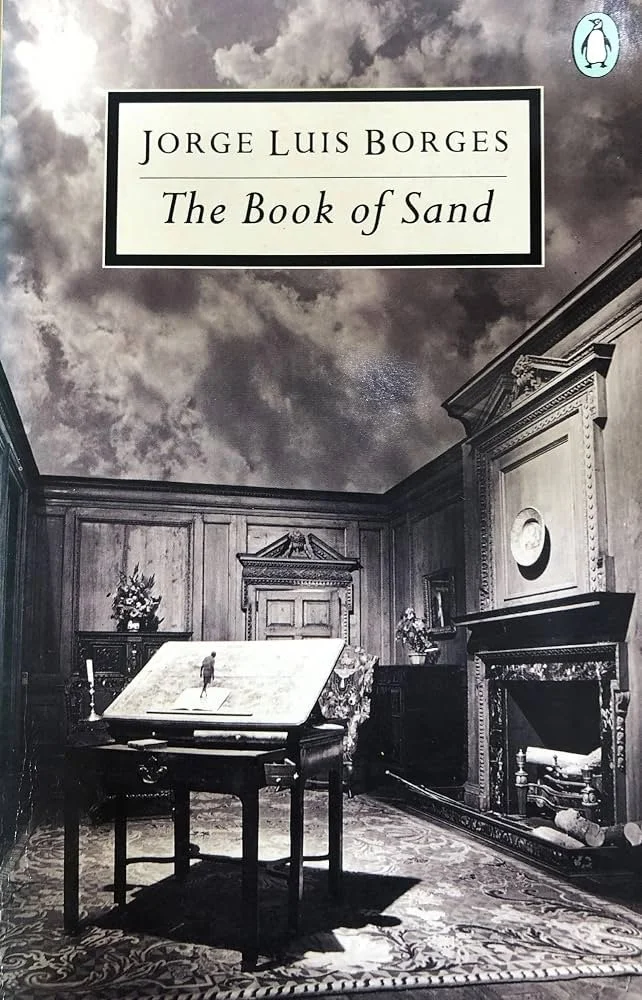
The Book of Sand and Shakespeare's Memory - Jorge Luis Borges
This was my first foray into Borges, a collection of short stories written at the end of his life while mostly blind. What I encountered there was a deeply intimate look into the state of the great writer’s mind then and the questions he was asking himself regarding legacy, literature, the infinity of time and space, the contemplation of nothingness, and what it would be like to revisit life through a hall of mirrors, asking would he have done things differently.
I got the sense that the short stories here were largely auto-fictional, and when these would inevitably move into the realm of magical realism, they were always grounded in everyday questions regarding reality, life, philosophy, and history. There are common threads in his narratives; settings bouncing between his home region of Argentina and Uruguay to Germany and the Nordic countries, the pervasive references to the color yellow (it was said this was the last remaining color of Borges’ vision at the end,) the obsession with memory, and references to the giants of the literary world stage. It is remarkably evident that Borges has been obsessed with reading great literature his entire life.
This was apparently Borges’ darling output, the work he held in his own highest regard. Many others look to Ficciones (originally partially released as Labyrinth’s,) which contains the infamous The Library of Babel, or El Aleph, holding The Immortal, each among others. I found the stories here to be entirely well-written and enjoyable to read. I did find their impact to be a bit inconsistent, with my favorites (The Congress, The Bribe, and the titular stories) being strongly atmospheric and curious tales that kept me rapt. Others kept me at arm’s length, never engaging my brain in the way I can see that Borges intended. To be abundantly fair, this sort of inconsistency plagues just about all anthologies of this ilk, even among the masters such as Bradbury, Chiang, and evidently, Borges himself.
If this is considered some of his more middling work, I cannot wait to explore what is ahead of me in Ficciones and El Aleph.
4 out of 5