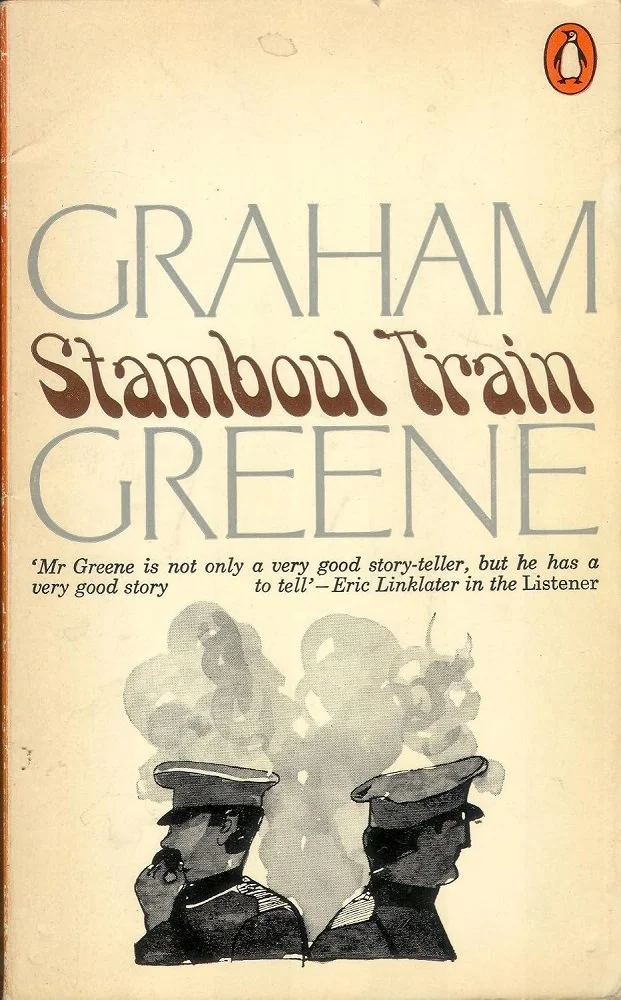
Orient Express (orig. Stamboul Train) - Graham Greene
In Christopher Hitchens' lead-in contained in the Penguin Classics Deluxe version of the novel I own, he claims the term 'Greenelanders' to name fans of the author Graham Greene and it's fair to say that I am a citizen of this reverential nation.
Graham Greene's breakout novel, originally published as Stamboul Train in 1932, falls into the category he himself called his "entertainments," meant as a divider between works written mainly for entertainment value as thrillers versus the supposed heavier weight of his more moral or politically focused "Catholic novels." That said, what separates Greene from the rest, and what leads us fans of his to Greeneland, is that even while weaving a story together involving strangers on a train through a strange land, his writing is eloquent, sharp, and humanistic. Despite this being a novel about the interactions of an arrogant thief, a fugitive communist, a drunk journalist, a breakout writer, a wealthy Jew, and a naive dancer, Greene pens beautifully insightful passages on isolation, betrayal, self-realization, regret, longing, and acceptance. There's one chapter in particular that I found especially masterful. In an almost athletic rhythm and cadence, we are treated to the atmospheric dining car of this train as it rattles through central Europe in the winter and Greene seamlessly moves from sound to sound, bits of conversation interspersed with immersive world building and the tangible movement of time and it all comes together unlike anything I've read before. All of this for what the author would call entertainment. It is not just that, as much as it is absolutely that, such is the craft and beauty of Graham Greene's storytelling.
Now Greene's internal thoughts on everything from Jews to Americans have been hotly debated for decades. I won't get too into it here. While some may take issue with Greene's treatment of Myatt in the novel, and often ask questions whether Greene shared the same antisemitic sentiments as some of the characters, I just encourage readers to check preconceived notions at the door and formulate your own conclusions to at least after reading. Graham Greene used literature as a means to satirize, critique, and discuss the world as he saw it. My favorite novel of his, The Quiet American, is often seen as anti-American, and yet I see it as an exploration into the power and pitfalls of unchecked patriotism and its effects on the citizenry, not as anti-USA fullstop. Similarly here, I think conclusions could be drawn that Myatt is written as a somewhat sympathetic character, left to the mercy and effects of capitalism. But, as with all literature, the beauty is in the conclusions you yourself draw as you read it.
Overall I can see how this novel became a breakout for Greene and I also see how it built the mold that became the strangers on a train genre. An absolutely entertaining, and beautifully written, novella.
4 out of 5