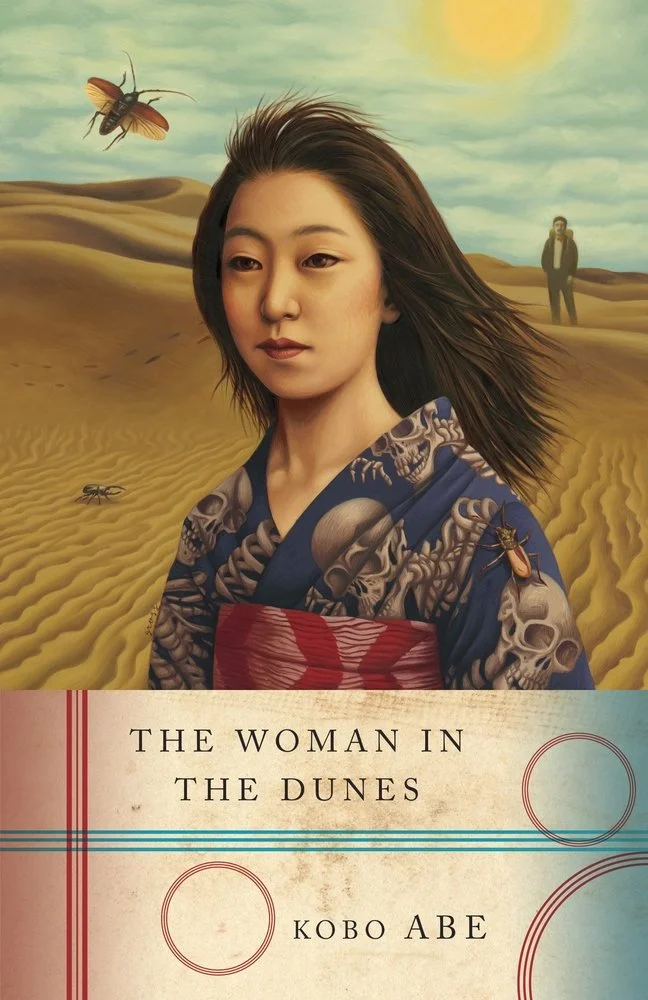
The Woman in the Dunes - Kōbō Abe
Take the abysmal bleakness of The Road, removing the most visceral of the violence, and mix it with the distilled social isolation of Camus' The Stranger and what you're left with is an approximation of Kōbō Abe's haunting breakthrough novel, The Woman in the Dunes.
On the surface, we are presented with a relatively traditional missing persons mystery. And then we are immediately, and literally, dropped in to a surrealist hole. The environment comes alive on the page in one of the most uniquely effective settings I've encountered in literature. In a Sisyphian hell, our character is made to work against his will against a tide of ever encroaching sand washing over an isolated village in coastal, post-war Japan. There, trapped in a strangely rotting house at the bottom of an inescapable hole, he meets a mysterious woman seemingly plagued with pained acceptance towards her situation, confounding the new addition. The two then dance along shifting lines of themes such as resistance versus acquiescence, determinism versus free will, and finding one another both enemy and partner.
The bizarre sand, obfuscating mist, and erratic and often incongruous light coalesce to become a character all onto its own, and as I read it in the late spring heat of London, I could feel this world's grime permeating through my sweat as I lived the man's anxiety page by despairing page. Kōbō Abe is firmly planted among the surrealist and absurdist greats. I found this novel to be a high bar-setting, yet accessible, entry into his work for first-time readers, something that will be rare to be bested.
4.5 out of 5