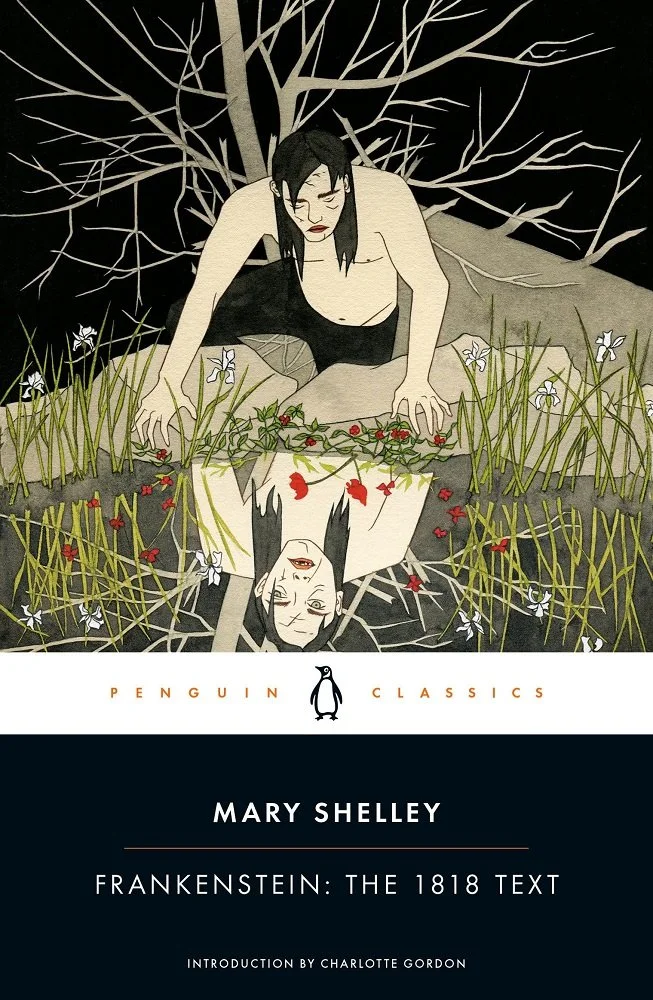
Frankenstein; or the Modern Prometheus - Mary Shelley
Quite possibly one of the most misunderstood stories of the last couple centuries, reading Frankenstein is as separate an experience from watching almost anything related to "Frankenstein" as mountain climbing is from cooking. For those who feel that the 1930s Universal Monsters filmic take of the tale is definitive, you may be missing out on one of the most achingly beautiful treatises on the human condition ever written.
Frankenstein's monster -- the wretch, the demon -- is a soul brought into this world broken and ill-fitted for the endeavor, someone who has all of the innocence and naivete of a child yet the appearance of an abomination. And like a child he looks to his creator for comfort and acceptance, a natural reaction to a world in which he does not yet understand. He is, in response, cast out. He is met with a deluge of repulsion towards him; cruelty, hatred, exclusion becomes his daily experience. Despite this, he develops an eloquently unique and beautiful perspective on the novel reality that surrounds him. Before a recounting of his first year of his life -- alone to fend for himself in the woods and observing humanity always from the periphery -- he delivers quite possibly the most moving monologue I have ever read. He asks, no pleads, for acceptance from his maker, a respite from his aching loneliness and exile, and if not that then for his creator to enact his Promethean skill one last time, to provide him a partner. We are then treated to a wonderous several chapters as he describes a perspective on observing the world with an infantile, yet literate, mind.
Oh, and what a joy of a thing it is to behold.
The writing at once makes you feel at home in it's confusion and excitement of the world while also allowing one to see it through an alien prism, a hauntingly beautiful distortion of reality that is both so human and yet so strangely new. Haven't we all felt this dissociation before in our lives, the experience of surreal newness while not yet fully knowing oneself? It is in that reverie that harsh realities then start to alienate and break our supposed antagonist and it becomes painfully clear that he is to forever walk this earth alone. His humanity is destroyed and vengeance is left in its stead. You can only read helplessly as a cruel world bullies this new and once hopeful heart.
Now many have touted the cliche that Victor Frankenstein, playing mad scientist-a-la-God with his hubris, is "the real monster." I disagree. There is no good and evil in this story, at least not in absolutes. What is open for debate is the human spectrum and the capacity for evil and good to live in all of us, that it is what we do when faced with a glimmer of hope or unrelenting despair that determines if we will give into our greater demons and cross lines from which we may never return, or hold true to some value that remains core to our soul.
To think that an 18 year old, while absolutely a prodigy, was able to write so deeply about such profound emotions as faced by the pained rage of the monster or the guilty aspirations of a scientist is honestly bewildering. But then again, perhaps none on earth feel such twisting of the soul, such questioning of their sense of belonging and dreams of their future than a teenager. Maybe she was the only one who could write this in that era. Regardless, the world is a better place because this novel exists.
One of my favorite books of all time (however I could go without seeing the word "countenance" ever again).
5 out of 5